


It started with a coincidence
I applied to Emailvision, an email marketing SaaS platform, without knowing that my former CEO from TravelLab was already there. He saw my application, called me in, and hired me as an account manager — they needed someone technical enough to shoulder the technical complexity of an email delivery platform.
On paper that was a commercial role. In practice it was the most technical account management job in the building. When a customer was onboarded, I could talk at a deep technical level with the clients' tech team to integrate them the best way possible into the system. If their data sync broke, I could support them to restore it and sell improvements. I was the one who could have that conversation without a developer in the room. The other account managers couldn’t, and it showed.
When I finally moved on, I’d stopped being an account manager who understood technology and started being something less tidy: a developer who happened to sit on both the commercial and tech side of the table. Nobody designed that role, but customers kept hiring me for it.
Hired for the small job, ending up with the bigger one
The pattern showed up early, and it never really stopped.
Epteca was an Emailvision customer. Their strategy is to deliver ancillary sales through automated post-sale communications to travelers by sending relevant information and offers at the right time prior to the trip. I went in as a developer — not very senior at the time, but one who knew Emailvision inside out and spoke fluent marketing, which weighted heavier given the marketing platform they were building. I had the title System Lead and Developer: the only developer on the team, building the platform and the company's operating processes alongside the CEO from a blank piece of paper, 2011 to 2013 — then again as a contractor in 2016.
eBay was supposed to be campaign work. Their Danish marketplace and automotive brands — DBA, Bilbasen, Bilinfo — needed daily email operations run in a platform I knew well. From 2015 to 2018, it became data integrations, then automation, and eventually an external platform built to do what the original setup couldn't.
I’ve stopped treating this as coincidence. When you can see both the commercial requirement and the technical constraint at the same time, you get handed the part of the problem nobody else wants to own.

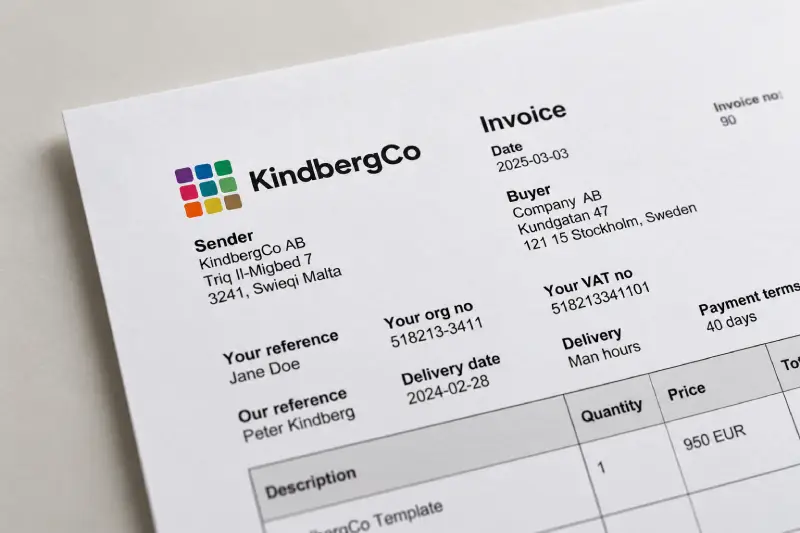
2013: my own name on the invoice
KindbergCo started right after Epteca, with a hotel booking site and a CMS I’d never used.
My first client was a start-up in Malmö, building a hotel booking site on Umbraco — a CMS I'd never touched before and picked up because the work required it, which is still how I learn most tools. The project needed more Umbraco depth than I had at the time, so a specialist from an agency came in alongside me. The site itself never launched. The agency relationship did.
That agency later needed a C# developer, and we ended up sharing an office. I worked on their projects whenever they needed me to, without them carrying the cost of a permanent hire. That's also where I learned Umbraco properly — mostly the advanced, hands-on integration work behind the scenes, while they handled the day-to-day configuration.
Thirteen years later, that's still one of the ways I work — for agencies who want the same setup.
Fewer clients, longer engagements
Most of my work has been measured in years, not sprints.
Infront — real-time market data and trading tools for financial professionals across Europe and South Africa — started as a one-month website upgrade. I stayed five years, 2018 to 2023.
Infront's tech team worked from floor 3. I sat on floor 4, across the table from the global head of sales, and worked directly with the global head of marketing — she was in Stockholm, I was in Oslo. Both have since given me public recommendations.
Three rebrands. Systems integrations with their trading platform. CRM, SEO, GDPR, analytics, campaign infrastructure. Not a project. An ongoing responsibility for a platform that had to keep working — while the company's valuation grew from roughly NOK 480m to NOK 1.7bn.
Most recently I spent close to a year embedded full-time in a Swedish agency’s delivery team, across Umbraco 13, 15 and 16, inside their processes and tooling — remote, plus roughly three weeks on-site.
Short engagements are fine and I take them, but the work I’m proudest of is the kind where I’m still accountable two years in.

What thirteen years of the same setup work turned into
Every Umbraco project I took on started with the same two to three weeks.
Canonicals, hreflang, sitemaps, structured data, security headers, a content security policy, performance defaults, accessibility groundwork, and a block architecture editors could actually use. Necessary work. Solved problems. Rebuilt from scratch on project after project.
So I built it once, properly. The KindbergCo Umbraco Platform is a production-ready Umbraco 17 foundation — over 500 hours of development, opinionated where it matters, designed to be extended rather than merely configured.
This website (KindbergCo.com) runs on the platform, with minimal deviation. The blocks on this page, the language switcher, the structured data in the source, the Core Web Vitals scores — that’s the product, in production, in front of you.
A platform vendor whose own site runs on something other than their own software is telling you all you need to know.
How my unique background benefits you
You don’t have to write the spec first
I can sit with the people closest to the problem — marketing, sales, management, product — work out what they actually need, and turn it into a technical approach. You don’t have to translate a business requirement into a ticket before the conversation can start.
One person, from requirement to release
No account manager relaying messages, no junior team behind the scenes. The person you talk to is the person who scopes it, builds it, tests it and ships it — and who’s still there if something breaks in month eight.
Technical decisions with the commercial reason attached
Performance, technical SEO and accessibility are engineering concerns, not marketing requests. I treat them that way from the start, because I’ve spent enough years on the commercial side to know what it costs when nobody does.
Where I am, and where I can be
I moved to Malta in 2024 and stayed. The Swedish consulting market had gone quiet — the economic tail of the pandemic was still working its way through, and consultants are the first to go — so I moved somewhere with better weather and kept honing my skills.
I work remotely across Europe, on-site by agreement in the Nordics, Malta and the DACH region, and I’ll relocate for the right engagement, temporarily or even permanently.
Drop a few lines about what you're building, your technical stack, and what the platform needs to do below. I only take on projects if I believe it's mutually beneficial, and in case it would not be, I’d rather tell you that on the first call than in the third month.